Quick answer: Most 10-year-olds play with a size 4 football. Size 3 is for roughly ages 4 to 8, size 4 for about 8 to 12, and size 5 (the adult ball) from around 12 or 13. Some clubs and leagues set their own rules by age group or format, so check with your child's coach before you buy.
We sell footballs at our Cardiff shop and online, and "what size ball does my child need?" is a question we hear a lot. Here is how to pick the right one, and why getting it right matters more than most people think.
Football sizes by age: the quick chart
| Ball size | Typical age | Circumference (approx.) | Weight (approx.) |
|---|---|---|---|
| Size 1 (mini/skills) | Toddlers and skills practice | 46-51 cm | Under 200 g |
| Size 3 | 4 to 8 years | 58-61 cm | 300-320 g |
| Size 4 | 8 to 12 years | 63-66 cm | 350-390 g |
| Size 5 | 12 years and over, adults | 68-70 cm | 410-450 g |
These are guides rather than hard rules. A tall, strong 9-year-old and a smaller 11-year-old can both be right for the same ball, so use age as a starting point, not a deadline.
What size football for a 10-year-old?
A size 4 is the standard answer for a 10-year-old, and it is what most under-10 and under-11 teams use in matches. It is lighter and smaller than the adult ball, so a growing child can pass, control and shoot with good technique instead of leaning back and slicing at a ball that is too heavy.
The one exception is a child who is already playing on a full-size pitch with a team that uses size 5, or one who is clearly ahead of their age group. Even then, we would suggest a size 4 for training at home so they can practise first touch and shooting form on a ball they can control.
Can a 10-year-old use a size 5?
They can, but it is rarely the best idea. A size 5 is around 60 to 100 g heavier than a size 4. On a cold, wet pitch it gets heavier still, because the cover soaks up water. A child who struggles to lift a heavy ball tends to strike it with the toe and the ankle, which builds bad habits. Moving up too early is an easy mistake to make.
Football sizes for younger and older children
Ages 4 to 8: size 3
A size 3 suits most children from about four up to eight. It is the ball for first kickabouts, after-school clubs and mini-soccer formats. If your child is five or six and still not confident, a lightweight training ball in size 3 is more forgiving than a match ball.
Ages 8 to 12: size 4
Size 4 covers the biggest age range and the most match football. Whether your child is 8 or 11, it is the ball that most youth league fixtures will use. Buy a training ball with a durable cover, because it will take a beating on school fields and astro.
Ages 12 and over: size 5
From under-13s upwards, most teams switch to size 5. If your child is moving up a year group, ask the coach when the switch happens, and buy the size 5 a few weeks early so they can get used to the weight.
How to choose the right ball for your child
- Ask the club or school first. Leagues and academies often set the ball size by age group, and it can differ between 5-a-side, 7-a-side and full-size formats.
- Pick a training ball for everyday use. A stitched or durable machine-stitched ball takes knocks better than a thermally bonded match ball.
- Do not buy a size up to grow into. Unlike boots, a ball that is too big makes technique worse straight away.
- Check the inflation. A ball that is too hard or too soft feels the wrong size. Most children's balls need pumping up every couple of weeks.
Looking at kit as well? Our guide to breaking in football boots will help with the other half of the matchday bag.
Our picks at YC Sports
These footballs are in stock at the time of writing. Sizes and colours change quickly, so check the size you need on each product page.
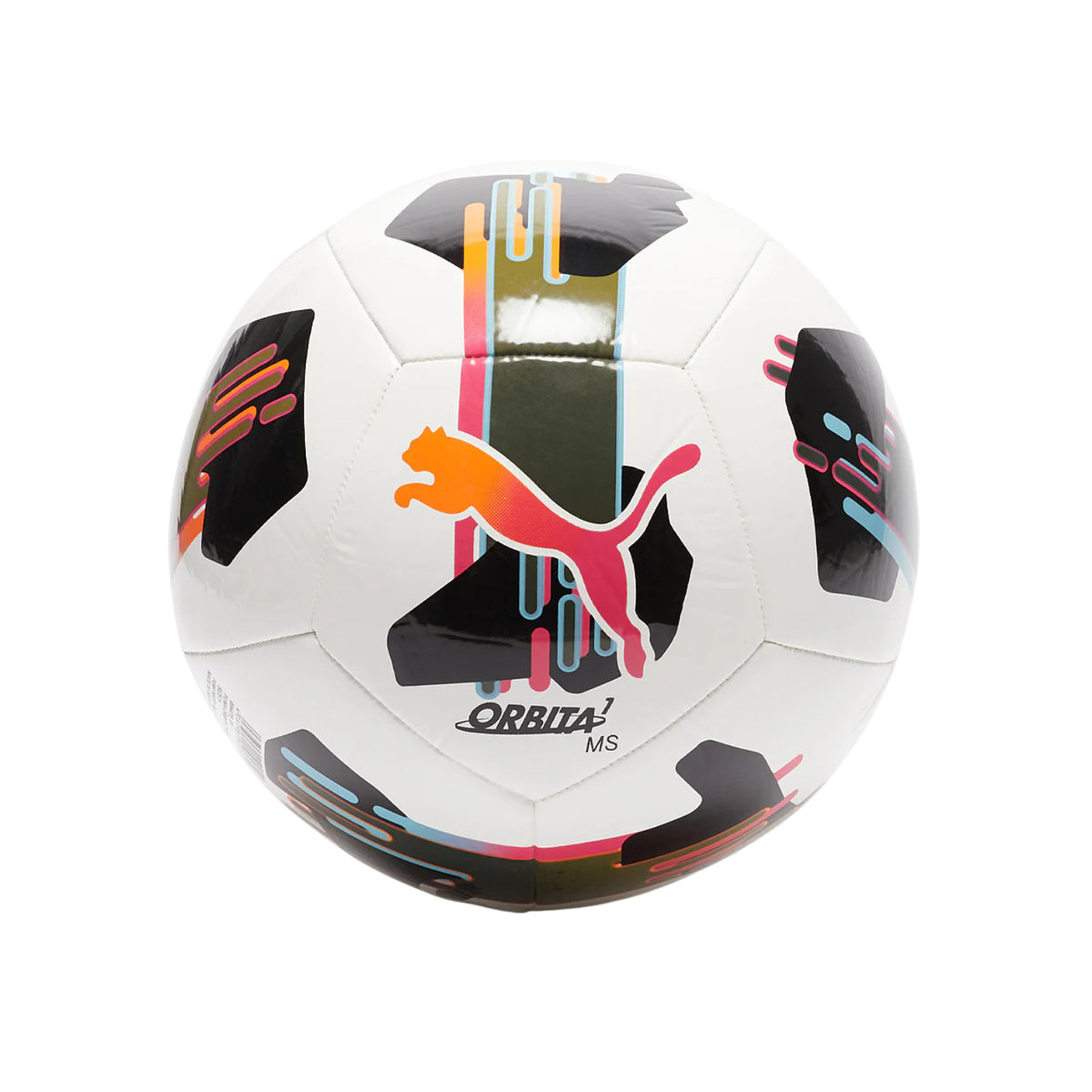
- Puma Orbita 7 Football - £6.67. A low-cost everyday ball in size 4 and size 5. A good first ball for a 10-year-old.
- Adidas Starlancer Club Football, Black/Gold - £10.49. A club-style training ball. Size 3 and size 5 are in stock (size 4 is currently sold out).
- Precision Fusion IMS Training Ball - £11.95. A tough training ball with size 3 and size 4 available in selected colours.
- Adidas Messi League Football - £24.49. A size 5 ball for older players moving up to the full-size game.
See everything in our footballs collection, or browse football boots for the whole kit.
Frequently asked questions
What size football is bigger, 4 or 5?
Size 5 is bigger. It is about 5 cm larger around than a size 4 and noticeably heavier. Size 5 is the adult ball.
Can a 10-year-old use a size 5 football?
Yes, but a size 4 is usually better. The lighter ball helps a 10-year-old pass, control and shoot properly. Move to size 5 when the team or league does, normally around under-12s or under-13s.
Is a size 5 football good for kids?
It is good for older children who are playing full-size matches, but for most under-12s it is too big and heavy. A size 4 is the better choice for that age group.
What age is a size 3 football suitable for?
A size 3 suits most children from about four to eight. Children who are very small for their age, or still learning, may stay on a size 3 for a little longer.
What size football do professionals use?
Professionals and adults play with a size 5, which is around 68 to 70 cm in circumference and 410 to 450 g in weight.
Need a hand choosing?
If you are not sure which size your child needs, pop into our Cardiff shop or browse the full range of footballs online. Tell us the age group and the club or school, and we will point you at the right size.
Need a hand choosing?
Our team has been kitting out players, parents, schools and clubs in Cardiff since 1983. Shop our Football Balls range online, or visit our Whitchurch, Cardiff store and we will help you get it right first time.
Popular picks related to this guide: