
Quick answer: Netballs come in two main sizes. A size 5 is the full-size ball used in senior and secondary-school netball, from about age 11 (Year 7) upwards. A size 4 is slightly smaller and lighter, and is the standard ball for primary-school and junior netball, including High 5. If a child is in Year 6 or below, buy a size 4. Year 7 or above, buy a size 5.
Netball sizes at a glance
Most families only ever need to choose between two balls. Here is how they compare:
| Size | Who it's for | Typical use |
|---|---|---|
| Size 5 | Age 11+ (Year 7 upwards) and adults | Secondary-school PE, club netball, senior leagues, all official adult matches |
| Size 4 | Roughly age 7–11 (Years 3–6) | Primary-school netball, High 5, junior club sessions |
| Size 3 / mini | Under 7s | First ball-skills sessions, garden play. Not used in matches. |
A size 5 netball is roughly 69–71cm round and weighs about 400–450g, which is the size set by the World Netball rules. A size 4 is a few centimetres smaller and noticeably lighter, which makes a real difference to a nine-year-old trying to make a chest pass the length of a third.
What size netball for each school year?
Ages are a guide, not a rule, so the simplest way to choose is to match the ball to what your child's school or club uses:
- Reception to Year 2 (age 4–7): a size 3 or soft mini ball for catching and throwing practice. Most infant schools don't play netball as a game yet.
- Years 3–6 (age 7–11): size 4. This is what primary schools and High 5 netball use. A ten-year-old needs a size 4; an eleven-year-old still at primary school usually does too.
- Year 7 and above (age 11+): size 5. Secondary schools switch to the full-size ball straight away, so a child starting Year 7 who wants to practise at home should have a size 5.
- Adults, club and back-to-netball players: size 5, always.
If your child is on the boundary — a strong Year 6 player who also trains with a club's under-12s, for example — ask the coach. Practising with the ball you play matches with is what matters.
Match ball or training ball?
Once you know the size, the second choice is the type of ball. The difference is mostly in the outer cover and how long it lasts.
Training netballs have a tougher, rubberised surface that copes with outdoor tarmac, playground walls and being left in the boot of the car. They are cheaper and they are what most schools buy in bulk. For a child practising shooting on the driveway, a training ball is the sensible choice.
Match netballs have a softer, grippier cover — usually a textured, multi-panel design — which is easier to catch cleanly and gives a truer flight on a shot. They feel better in the hand but wear faster on rough outdoor courts. Buy one for club players, team captains or anyone playing league netball.
How to check a netball is right
A few quick checks before a match or season:
- Look for the size on the panel. Every netball has its size printed near the brand logo. It's surprisingly easy to pick up a size 4 from the PE cupboard for a senior session.
- Inflate to the pressure printed by the valve. An under-inflated ball bounces low and feels dead; an over-inflated one stings the hands and is hard to catch. Use a pump with a gauge and a moistened needle.
- Do the bounce test. Dropped from shoulder height onto a hard court, a properly inflated ball should come back up to roughly waist height.
- Check the grip. When the surface goes smooth and shiny, a match ball has become a training ball. Move it down the list.
Buying netballs for a school or club
Coaches and PE departments usually need one ball between two players for passing drills, plus a couple of match balls. Buying a box of 15 is far cheaper per ball than buying individually, and most of the Rhino balls we stock come in both size 4 and size 5 so primary and secondary sessions can be kitted out from the same range. We can also supply netballs printed with a school or club name — get in touch with the team at YC Sports for bulk and branded orders.
Our picks at YC Sports
All in stock online and in store at the time of writing. Prices may change.
- Rhino Zephyr Training Netball — £7.96, size 4 and 5. Our lowest-priced training ball and a solid first netball for home practice.
- Rhino Airborne Netball — £9.95, size 4 and 5. A durable all-rounder in two colourways; good for playground and outdoor courts.
- Rhino Cyclone Training Netball — £11.59, size 4 and 5. A grippier training ball for juniors who are starting to play club netball.
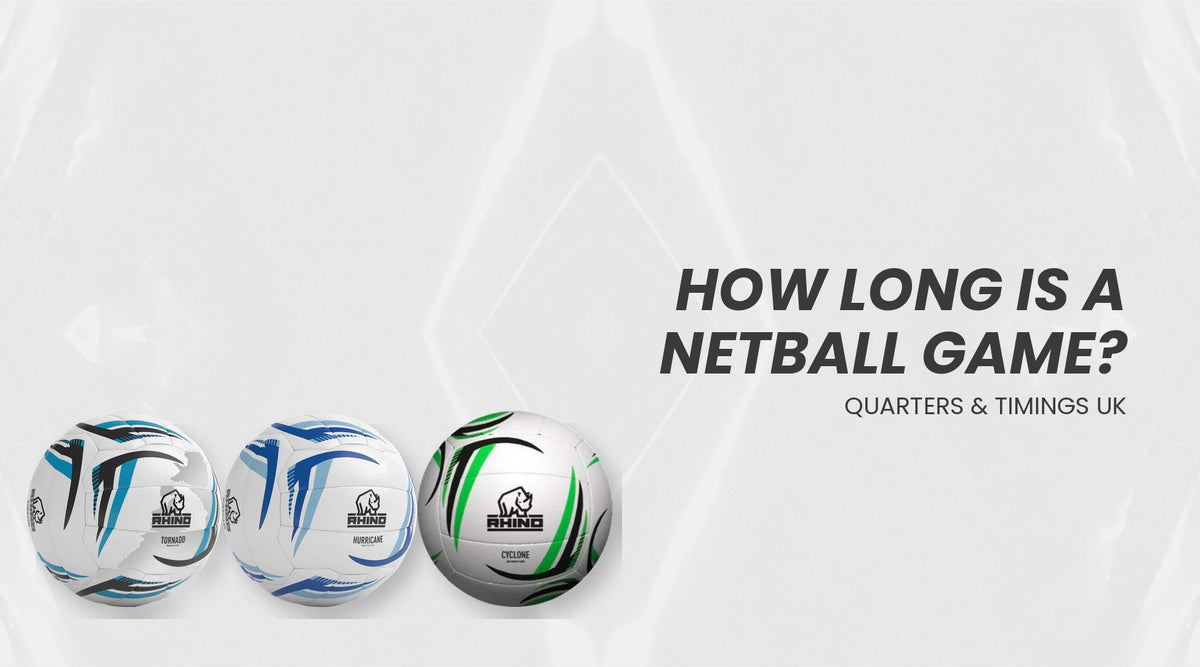
- Rhino Tornado Match Netball — £18.49, size 5. A proper match ball for secondary-school, club and adult players.
- Rhino Zephyr Training Netball, box of 15 — £103.96, size 4 or 5. The most cost-effective way to equip a school or club session.
Browse the full netball range, including bibs, ball bags and netball trainers.
Frequently asked questions
Is size 5 a full-size netball?
Yes. Size 5 is the official full-size netball used in all senior and adult matches, and in secondary-school netball from Year 7 upwards.
What age uses a size 4 netball?
Size 4 is for juniors, roughly age 7 to 11. It's the standard ball for primary-school netball and for High 5, England Netball's junior format.
What size netball for Year 8?
Size 5. Secondary schools use the full-size ball from Year 7, so a Year 8 player should practise with a size 5.
What size netball for a 10 year old?
A size 4. Most ten-year-olds are in Year 5 or Year 6 and play with a size 4 at school.
What pressure should a netball be?
Use the pressure printed next to the valve, as it varies slightly between makers. As a quick check, a ball dropped from shoulder height should bounce back to around waist height.
Get the right ball first time
For most families the answer is simple: size 4 for primary school, size 5 from Year 7. Choose a training ball for home practice and a match ball for club players. If you're not sure, pop into one of our Cardiff stores or contact our team — and once you've sorted the ball, read our guide to how long a netball game lasts.