
Quick answer: A field hockey team plays 11 players — one goalkeeper and ten outfielders split between defence, midfield and attack. The usual shape is a goalkeeper, three to five defenders, three or four midfielders and two or three forwards, most often set up as 4-3-3 or 5-3-2. There is no offside in modern hockey, so every outfield position is expected to attack and defend.
If your child has just been put in a school or club side and come home saying they're "playing left half", this guide explains what that actually means — and, because we kit out hockey players in Cardiff every week, what each position needs in the bag.
The 11 positions on a hockey pitch
Hockey squad numbers vary by club, but the roles are consistent across school, club and international hockey.
Goalkeeper (1)
The only player allowed to use their body, feet and hands to stop the ball, and only inside their own circle. Goalkeepers must wear a different colour shirt from both teams and protective headgear. It is the most equipment-heavy role in the sport by a distance — helmet, chest pad, leg guards, kickers and hand protectors.
Defenders (3–5)
Usually a centre-back or sweeper plus left and right backs. Their job is to intercept, tackle, and clear the ball wide rather than up the middle. In a five-defender system, one plays as a sweeper behind the back line. Defenders also make up the bulk of the four outfielders allowed behind the backline at a penalty corner, alongside the goalkeeper.
Midfielders (3–4)
Often called halves — left half, centre half, right half. The centre half is typically the fittest player on the pitch and the one who links defence to attack. Midfielders cover more ground than anyone else in a match, which is why stick weight and shoe cushioning matter more here than in any other position.
Forwards (2–3)
Left wing, centre forward and right wing. Forwards work in the attacking 23-metre area and inside the circle. Because a goal can only be scored from inside the circle, a forward's value is measured in how often they get on the end of something there — not in how far they can hit the ball.
Common hockey formations explained
Formations are written from the back forwards, excluding the goalkeeper.
- 4-3-3 — the default in UK club and school hockey. Balanced, easy to coach, and forgiving if one player is out of position.
- 5-3-2 — an extra defender or sweeper. Common in youth hockey and against stronger sides.
- 4-4-2 — packs the midfield. Useful when the opposition is winning the centre of the pitch.
- 3-3-3-1 — the Dutch system, with a lone striker. Demanding on fitness and rarely used below senior club level.
Junior and school hockey is frequently played 7-a-side or 9-a-side on a smaller pitch. The roles compress, but the principle is the same: someone marks, someone links, someone finishes.
There is no offside in hockey — and it changes everything
Offside was removed from hockey's rules in 1998. This is the single biggest difference between hockey positions and football positions, and it is where most parents' assumptions go wrong. A forward can stand behind the last defender all day. Because of that, defenders cannot rely on a line to catch attackers out, and every outfield position has both an attacking and a defending job. "Playing left back" in hockey does not mean staying back.
Which position should a beginner play?
Most coaches start juniors in midfield. It puts them on the ball most often, teaches both halves of the game, and does not require the specialist protective kit a goalkeeper needs. If a player is comfortable receiving under pressure and has good stamina, centre half is the position that develops the fastest.
Goalkeeper is the one position we'd suggest treating as a deliberate decision rather than a default. The equipment outlay is significant, and most clubs have a set of shared kit a beginner can borrow before anyone buys.
What each position needs in the bag
This is the part no positions guide tells you, and it's the question we get asked across the counter every September. Stick bow — the curve of the shaft — should follow the role:
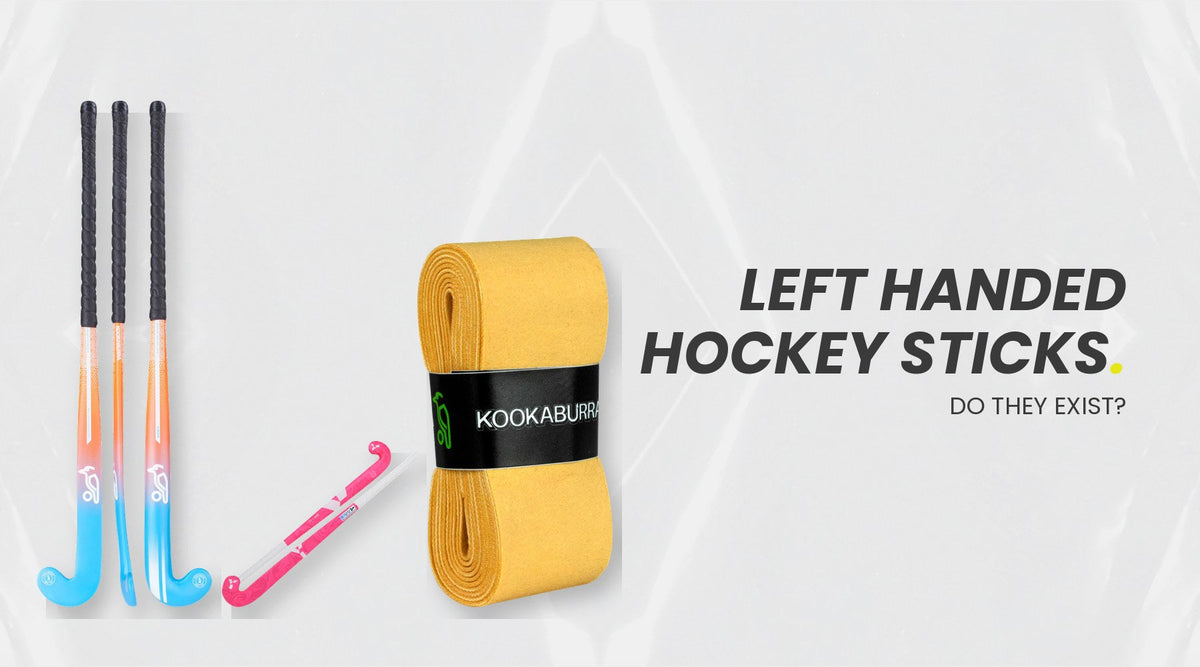
- Standard or mid bow — defenders and beginners. Best for clean hitting, slap passes and reliable trapping.
- Low bow — forwards and attacking midfielders. Built for drag flicks, 3D skills and close control, and noticeably harder to hit cleanly with.
- Higher carbon content — midfielders and defenders who need power over distance. Beginners are usually better served by more fibreglass, which is far more forgiving. We've explained this in detail in our hockey stick carbon content guide.
Length matters more than bow for juniors — get that right first using our hockey stick size guide by height. Beyond the stick: shinguards and a mouthguard are non-negotiable for every outfield position, gloves are near-essential for defenders taking short corners, and astro-specific shoes matter most for midfielders because of the distance they cover.
Our picks at YC Sports
All in stock at our Cardiff stores and online.
- Y1 JMB Junior Hockey Stick 2026/27 — £49.99. The one we hand to most school starters. Fibreglass-led and forgiving, in a junior length.
- Y1 GLB 30 Hockey Stick 2026/27 — £109.99. A sensible first "proper" stick for a midfielder moving up from a school stick.
- Grays Shield Hockey Shin Guard — £14.45. Every outfield position, every match. No exceptions.
- Y1 XP Shell Hockey Glove Long 2026/27 — £34.99. For defenders and anyone in the penalty-corner unit.
- Adidas Hockey Youngstar Junior Shoe — £50.00. Astro-specific junior shoe. Running trainers wear out fast on a water-based pitch.
Browse the full hockey sticks range, hockey shoes, or the complete hockey collection.
Frequently asked questions
How many positions are there in hockey?
Eleven players take the field: one goalkeeper and ten outfielders. Those ten are grouped into defenders, midfielders and forwards, with the exact split set by the formation — most commonly 4-3-3.
What is the hardest position in hockey?
Centre half is generally considered the most demanding outfield role because it covers the most ground and is involved in both defending and attacking phases. Goalkeeper is the most technically specialised.
Is there offside in hockey?
No. Offside was abolished from the rules of hockey in 1998. Attackers can position themselves anywhere on the pitch.
What position should a beginner play in hockey?
Midfield. It gives the most touches on the ball, teaches both attacking and defending, and needs no specialist protective equipment beyond shinguards and a mouthguard.
Do different hockey positions need different sticks?
Yes. Forwards generally use a low-bow stick for drag flicks and close control; defenders and beginners are better with a standard or mid bow for cleaner hitting. Length should be set by player height regardless of position.
Not sure which position or stick suits your player?
Bring them into either Cardiff store and we'll size a stick against them properly and talk through what their coach is asking for. Or start with the YC Sports hockey range online — everything above is in stock now, ahead of the new season.